

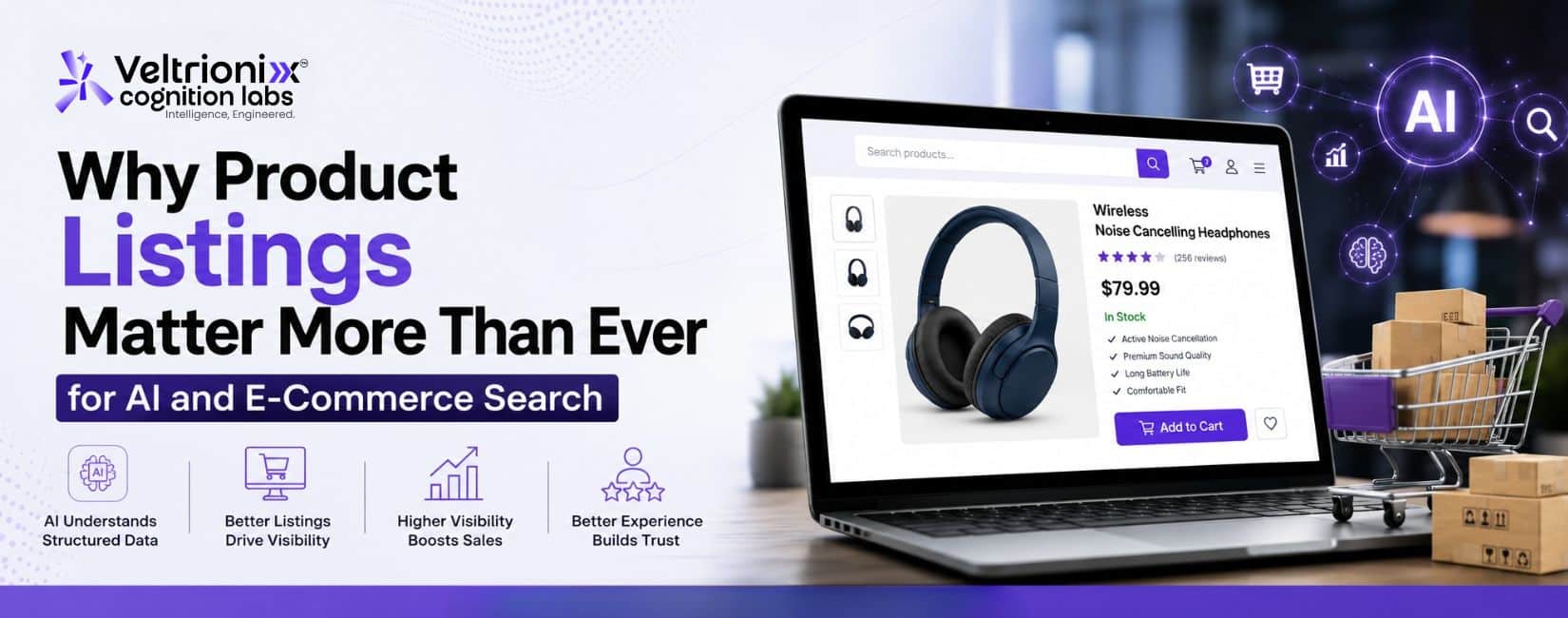
When shoppers look for a product, they rarely see the whole story first. They see a title, image, price, rating, or short description. Those small pieces can decide whether they stop, click, compare, or move on.
That makes product listings more important than they used to be.
An e-commerce product listing is not only a page written for a customer. It is also structured information that search engines, shopping platforms, and AI-powered discovery systems need to understand. Google says high-quality product data can help ads and free listings perform better, and its Merchant Center documentation notes that detailed product information can help products appear across AI-driven surfaces such as AI Mode.
For online sellers, good product listings have two jobs: explain the product clearly to people and make the product easy for digital systems to understand.
Search Is Becoming More Conversational
Traditional search often looks like:
“wireless earbuds under ₹3,000”
AI-assisted shopping can be more detailed:
“I need comfortable wireless earbuds for long calls, good battery life, and a budget under ₹3,000.”
The second query contains several buying signals. Strong product listings give search systems enough information to connect the product with those details.
That is why vague titles and thin descriptions can hold a product back. If important information is missing, there is less context for matching an item with a relevant query.
Product Titles Need More Than a Brand Name
A title should quickly tell shoppers what the product actually is.
Compare:
“AeroFlex Pro”
with:
“AeroFlex Pro Wireless Earbuds, Bluetooth 5.4, Noise Cancellation, 40-Hour Battery”
The second title provides much more useful context.
Google recommends including important product attributes in titles and placing key details early because titles can be truncated in shopping formats.
Useful title details can include:
- Product type
- Brand
- Model or variant
- Size
- Color
- Material
- Important feature
- Intended use
Do not turn the title into a pile of keywords. Write it so a customer can understand it immediately.
Descriptions Should Answer Buying Questions
A product description should do more than repeat the title.
Ask what a customer wants to know before buying:
- What does it do?
- Who is it for?
- What problem does it solve?
- What makes it different?
- What is included?
- What are the main specifications?
- How should it be used?
Clear descriptions help both shoppers and digital systems understand the product.
For AI search, this becomes even more useful because conversational queries often contain several conditions. A detailed listing gives a search system more information to judge whether a product fits the request.
Structured Data Gives Search Systems Better Context
Visible page content matters, but product structured data adds machine-readable information to your website.
Google explains that structured data can help Merchant Center and search systems understand product details. Product markup can also make pages eligible for merchant listing experiences showing information such as price, availability, shipping, and returns.
For your e-commerce product listings, keep key information consistent across the page and structured data:
Product Name → Price → Availability → Brand → SKU/GTIN → Images → Offers
Google also says structured data should match the information customers actually see on the page.
Images Are Part of the Listing
A weak product image can lose a sale before the description gets read.
Use clear, high-resolution images that show the product from useful angles. Where relevant, include images showing size, packaging, usage, important features, or variants.
Google recommends high-resolution product images and notes that strong images can help products capture attention and appear for relevant queries.
A good image should answer a simple question quickly:
“What exactly am I getting?”
Avoid cluttered visuals that make the product difficult to understand.
Keep Every Detail Accurate
One easy way to damage trust is to let product information become inconsistent.
Imagine your website shows ₹999, Merchant Center shows ₹899, and checkout shows ₹1,049. Even if the product is good, the customer now has a reason to hesitate.
Review these details regularly:
- Price
- Sale price
- Stock status
- Shipping
- Returns
- Product variants
- Images
- Specifications
Google recommends keeping product data current and aligning website information with submitted product data.
AI Commerce Is Making Product Data More Valuable
AI shopping is moving toward richer product discovery. OpenAI says its 2026 shopping experience uses merchant product data and feeds to make catalogs more complete and current inside ChatGPT.
This does not mean every store will automatically appear in an AI answer. It means detailed and accurate product information is becoming useful beyond traditional search and Shopping ads.
For Shopify merchants, OpenAI says product data is integrated into ChatGPT through Shopify Catalog, helping eligible products appear more accurately and completely in relevant conversations.
That makes strong product listings useful not only for Google but also for emerging AI-based shopping experiences.
Build Product Listings for People First, Systems Second
The goal is not to fill every product page with repeated keywords.
A better approach is:
- Write a clear product title.
- Add complete specifications.
- Use natural language customers understand.
- Include strong images.
- Keep price and stock accurate.
- Add product structured data.
- Keep Merchant Center data updated.
- Answer common pre-purchase questions.
- Make product pages easy to scan on mobile.
- Review listings regularly.
This is where SEO, AEO, and GEO overlap.
SEO helps people find your product page.
AEO helps your content answer specific questions clearly.
GEO focuses on making information understandable and useful in generative search experiences.
For businesses looking to strengthen the wider digital side of their e-commerce operation, explore e-commerce and digital growth services.
For practical guidance on product information and feeds, see Google’s product data best practices.
Final Takeaway
Your product listing is no longer just a sales page. It is a data source.
A strong listing gives shoppers the information they need while giving search engines, shopping platforms, and AI tools clearer signals about the product.
That is why product listings matter more than ever for AI and e-commerce search.
The goal is simple:
Make the product easy to understand, easy to verify, and easy to discover.
When product information is clear, complete, accurate, and useful, your store has a stronger foundation across search results, Shopping surfaces, and newer AI shopping experiences.